Xylanase is a type of complex enzymes capable of degrading xylan, primarily comprising endo-β-1,4-xylanase and exo-β-1,4-xylanase. These enzymes hydrolyze the β-1,4 glycosidic bonds within xylan molecules, breaking them down into xylooligosaccharides and xylose. Xylan constitutes the primary component of plant hemicellulose.
Baking processing: Improves dough rheological properties and gas retention, resulting in larger bread volume and softer texture.
Feed industry: Xylanase serves as a vital feed additive. When incorporated into corn- and wheat-based feeds, it breaks down non-starch polysaccharides (xylan) in raw materials, reduces intestinal viscosity, and enhances nutrient absorption. It particularly boosts growth performance in young livestock and poultry while decreasing fecal output.
| Origin | Nanning, Guangxi, China |
| Physical properties | white powder |
| Enzyme activity | 10000U/G-20000U/G |
| Odor | distinctive smell |
| Solubility | soluble in water |
| Fineness | 40 mesh, 60 mesh, 80 mesh (Customizable on demand) |
| Optimal pH value | 3.0~7.5 |
| Optimal temperature | Baking (20-75 ℃), feed (75-90 ℃) |
| Product execution standards | GB1886.174-2016 |
| Addition amount | Baking (0.01 ‰ -0.05 ‰), feed (0.06 ‰ -0.12 ‰) |
| Enzymatic hydrolysis time | Baking (0.5-1 hour) |
| Certification | HALAL certificate |
| ISO Quality System Certification | |
| FSSC22000 Food Safety System Certification | |
| Product specifications | Inner packaging: 1kg/bag, 5kg/bag, 20kg/bag. |
| Outer packaging: cardboard box, cardboard drum. |
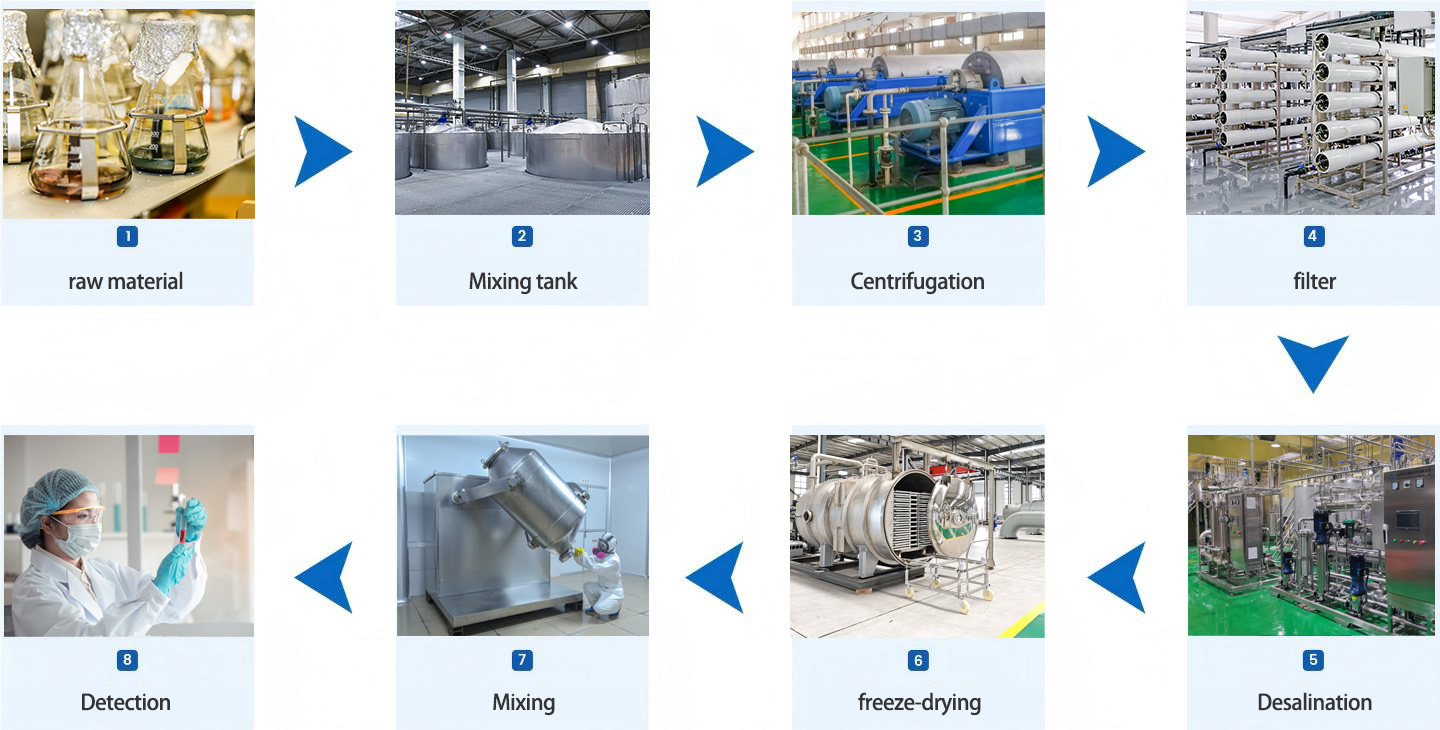
Applications
| Plant extraction | Juice production | baking | feed |
Notices
1. Enzyme preparations are bioactive substances that are susceptible to the inhibitory and destructive effects of heavy metal ions (Fe3+, Cu2+, Hg+, Pb+, etc.) and oxidants. Contact with them should be avoided during use and storage;
2. For people who are easily sensitive, it may cause hypersensitivity reactions; Close contact or slight inhalation may irritate the skin, eyes, and mucosal tissues; During the use of enzyme products, it is recommended to wear protective equipment such as masks and eye masks.
3. Moisture proof, light proof, sealed and stored at low temperature (0-10 ° C) for 18 months. Enzymes experience a certain loss of enzyme activity during storage, with 5-10% loss of enzyme activity at 10 ° C for 6 months and 10-15% loss of enzyme activity at room temperature for 6 months.
4. Extending the storage period or being affected by harsh storage conditions such as high temperature and humidity can lead to an increase in usage.